
Our seat switches are globally applicable, so to which countries are they exported, and are there specific certification requirements?
If exporting ride-on lawn mower seat switches to Europe, CE certification is mandatory and a compulsory requirement.
No CE: Cannot clear customs, cannot be sold, will be recalled / fined, etc.
RoHS is also mandatory, as it restricts hazardous substances like lead and cadmium. Electronic switches must comply with RoHS 2.0.
On January 21, 2016: Eight ministries and commissions issued Decree No. 32, "Management Methods for the Restriction of the Use of Hazardous Substances in Electrical and Electronic Products" (RoHS 2.0), expanding the scope from "electronic information products" to nearly all electrical and electronic products (including garden machinery / lawn mower electrical components).
Export to the USA / Canada (Mandatory: UL or ETL, industry-enforced)
UL certification (UL 20 / UL 1054)
Although not legally mandatory, the U.S. market / supermarkets / OEMs (John Deere, Cub Cadet) require it 100%.
Switches are safety control components and must have UL Listing or ETL certification (equivalent effectiveness).
Standard: ANSI B71.4 (Safety for Ride-On Mowers), mandating 2NC redundancy, seat-off engine cutoff.
Without UL/ETL: Cannot enter mainstream channels, OEMs will not purchase, and customs may also block.
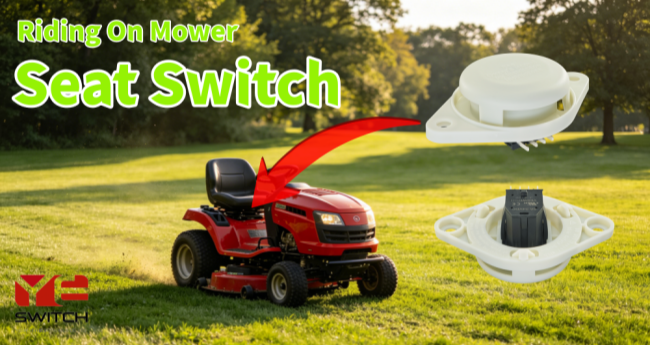
The core reason seat switches "must be certified" is that they are a safety component, thus subject to regulatory enforcement.High-quality seat switch
For the Cub Cadet (MTD Group) seat safety interlock switch and the John Deere AM130454 seat safety switch, safety-critical components are directly related to preventing accidental startup and seat-off engine cutoff, belonging to the core of the safety chain.