
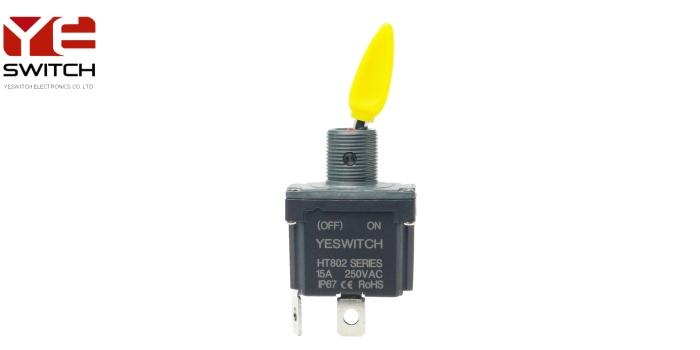
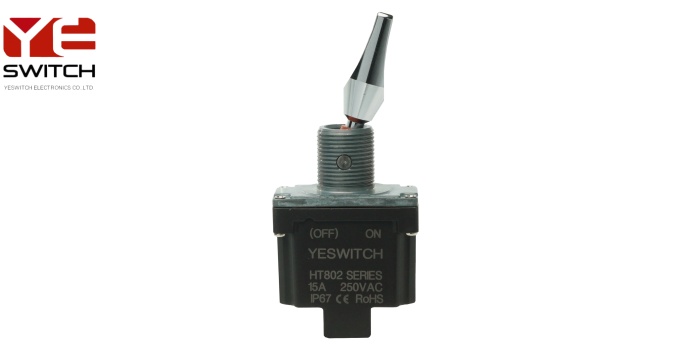
The "shaking head" function of aerial work platform vehicles (such as scissor-type, curved arm type, and straight arm type) refers to the rotation function of the work platform. The switch that controls this rotation function is what we often call the "toggle switch". Its importance is reflected in several key aspects:
Precise positioning and operating efficiency
Work range coverage: Aerial work often requires accurate positioning of the work point in the horizontal direction after reaching a certain height in the vertical direction (such as building exterior walls, pipes, equipment, lamps, structural parts, etc.). The shaking head function allows the operator to rotate the platform to make the work position face the target point without frequently lifting or moving the entire chassis.
Improve efficiency: Avoid repeatedly lifting or moving the chassis to adjust small angles, greatly reduce unnecessary operation time, and significantly improve work efficiency. The operator can reach the best working position faster and more directly.
Operator safety and stability
Avoid dangerous postures: Without the head shake function, the operator may need to overextend the body, twist the posture or even climb the railing to reach the work point on the side or back, which is extremely dangerous in a high-altitude environment and can easily lead to loss of balance and fall. The head shake function allows the operator to keep his body inside the platform guardrail and face the work point for safe operation.
Stable working platform: The professional head shake switch design (usually inching or requiring continuous pressing to activate) ensures that the rotation action is controlled and smooth. The operator can fine-tune the angle to avoid platform shaking or operator falling due to sudden or excessive rotation.
Work flexibility and applicability
Adaptation to complex spaces: The head shake function provides unparalleled flexibility when working in narrow spaces with obstacles (such as pipes, beams, equipment). The operator can rotate the platform to avoid obstacles and approach hard-to-reach work points at the best angle.
Multi-angle work requirements: Many operations (such as welding, installation, cleaning, and inspection) need to be performed from different angles. The head shake function allows the operator to easily adjust the direction without moving the entire machine.
Safety protection design:
Preventing misoperation: The shaking switch is usually designed to require the operator to consciously operate (such as thumb pressing, toggle switch), rather than a simple knob. This reduces the risk of accidental touch causing the platform to rotate unexpectedly.
Emergency stop association: The shaking function is usually associated with the platform's emergency stop system. If the emergency stop is triggered during the rotation, the shaking action will stop immediately to prevent collision or swinging in an emergency.
Limit protection: The platform rotation usually has a mechanical or electronic limit device to prevent the platform from colliding with the chassis or surrounding obstacles due to excessive rotation angle, protecting the safety of equipment and personnel.
Ergonomics and operating comfort:
The convenient control switch design allows the operator to easily operate with one hand (the other hand may hold the guardrail or operate the tool), reducing operating fatigue and improving the comfort of long-term work.
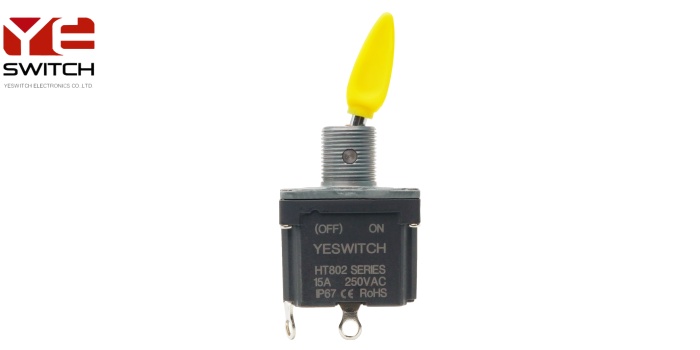
In summary, the toggle switches of the aerial work platform and the rotation function it controls are crucial because it:
The core is safety: allowing the operator to cover the working area without dangerous postures and reduce the risk of falling.
Improve efficiency: achieve fast and accurate positioning and reduce invalid movement time.
Enhanced flexibility: Adapt to complex spaces and work requirements at different angles.
Protection: Ensure safe operation through designs such as anti-mistouch, emergency stop linkage, and limit.
Therefore, the toggle switch is not only a tool to improve work efficiency, but also one of the core safety devices to ensure the life safety of aerial workers. Operators must receive training to correctly understand and use the shaking head function and its control switch, and strictly abide by the safety operating procedures.
When choosing an aerial work platform, the performance and reliability of its rotation (shaking head) function and whether the design of the control switch is safe and convenient are important considerations.