

During the process of handling business, I often receive feedback from many customers that the switch has poor contact. As a result, they come to us to discuss the causes and seek solutions, and replace the switch with a suitable one. Today, let's sort out the common causes that lead to poor contact of switches.
1. Oxidation or corrosion
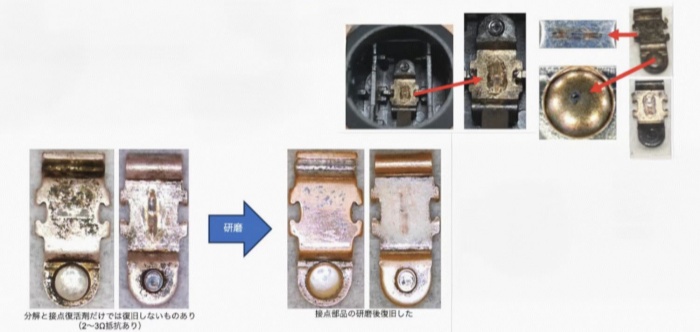
Contact oxidation: The switch contacts are mostly made of metals such as copper and silver. Long-term exposure to moisture or air containing sulfides will form an oxide layer (such as verdigris and silver sulfide), resulting in an increase in contact resistance.
Electrochemical corrosion: Electrochemical reactions may occur between different metal contacts in a humid environment, generating insulating compounds that accelerate oxidation and corrosion.

2. Dirt or carbon deposits (environmental factors)
Dust/grease accumulation: When the switch is used in an environment with dust, grease, and humidity (such as industrial products and kitchen equipment), dirt adheres to the contacts, hindering conduction.
Arc carbonization: When frequently turning on and off high current loads, the arc will produce carbonized deposits, covering the surface of the contacts.
3. Mechanical wear
Contact wear: Long-term mechanical operation causes wear and deformation of the coating on the contact surface, reducing the contact area.
Spring aging: Fatigue or deformation of the contact pressure spring leads to insufficient contact pressure.
Structural loosening: The screws and connecting components inside the switch are loose, causing the contacts to be misaligned.
4. Arc damage
High current arc: When a switch breaks a large current, the high temperature of the arc may erode the surface of the contacts, causing unevenness or welding.
Frequent switching: Frequent operation accelerates the damage of the arc to the contacts (such as the motor start switch).
5. Improper installation or use
Loose wiring: The wires are not securely fixed, resulting in an increase in contact resistance or a loose connection.
Overload use: The current exceeds the rated value of the switch, causing the contacts to overheat and deform.
Vibration environment: Vibration of mechanical equipment may cause the switch contacts to separate instantaneously or accelerate wear.
6. Material defects
Poor-quality contact material: Low-quality switches use metals that are prone to oxidation or have poor arc resistance (or have insufficient silver dot coating or poor contact material).
Coating peeling off: After the gold or silver plating layers on the contact surface wear out, the underlying metal is more prone to corrosion (due to electroplating process issues).
Solution
When choosing a switch, give priority to selecting a reliable brand switch. And provide the salesperson with the special environment of the product application, the rationality of the load and the special requirements. Professionals will recommend suitable products according to the requirements to avoid problems from occurring.
YESWITCH has been engaged in the production of electronic switches for over 10 years, mainly manufacturing toggle switches, push button switches, rocker switches, metal push button switches, and various lawn mower switches. Welcome to contact us for consultation, sample requests, and quotations.